
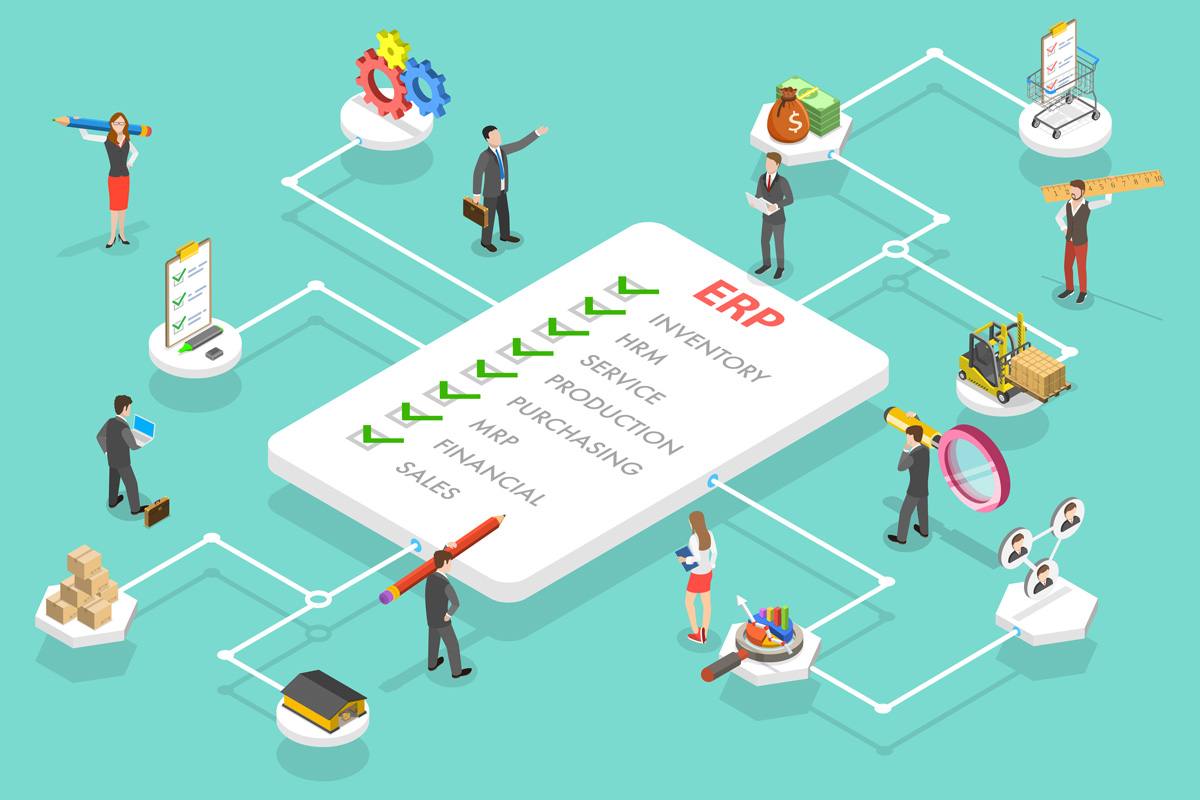
L’ERP est un logiciel incontournable conçu en vue de la transformation digitale des entreprises. Il participe activement à l’amélioration et à l’expansion des activités d’une firme via la standardisation des tâches. C’est l’outil parfait dont a besoin chaque chef d’entreprise en quête de solutions d’optimisation de la productivité. Pour tirer profit de ce type de logiciels, il faut les comprendre, et surtout maîtriser leur impact en matière de satisfaction de la clientèle.
Qu’est ce qu’un ERP ?
Il est judicieux de préciser que l’ERP est un acronyme anglais qui signifie « Entreprise Ressources Planning ». En français, il se traduit comme un progiciel de gestion intégré (PGI). Il faut remonter aux années 1990 pour assister à la naissance de cet outil, auparavant, les entreprises se cantonnaient à un développement personnalisé. Mais depuis, les choses ont beaucoup évolué et tout est à la standardisation désormais.
Ce qui est fascinant avec un ERP c’est la capacité qu’il a à standardiser les processus opérationnels de chaque société. Son intégration est un excellent moyen pour uniformiser les modules de gestion entre les structures. En effet, le système d’information ERP a la capacité d’intégrer la quasi-totalité des fonctions d’une société. La gestion financière, la gestion client, comptable, la vente, ou encore les achats, la transformation et la production. Il en est de même de la distribution, la gestion intègre des ressources humaines et bien d’autres.
Comment fonctionne un ERP ?
De manière générale, un logiciel ERP offre trois différents types d’environnement professionnels :
- Le premier, est un environnement de développement pour parvenir à la conformité du progiciel de base, avec les diverses spécificités de l’entreprise.
- Le deuxième environnement est celui du test afin que des simulations soient opérées. Ces dernières vous servent à vérifier via des tests, les récents paramétrages. C’est une pratique qui permet d’être certain de la bonne marche du progiciel par rapport au processus de gestion traité (vente, sortie de stock et achat).
- Le troisième environnement est rattaché à la production, il revêt aussi une importance capitale. Il correspond au progiciel que les gérants de l’entreprise utilisent de manière quotidienne.
Il est important de souligner que le travail dans le cadre d’un environnement test, s’effectue avant celui relatif à la production. Cette phase de test est considérée comme la « recette informatique ». Pour mieux comprendre, sachez qu’un Progiciel de Gestion intégré fonctionne selon certaines étapes clés. Dans un premier temps, vous devez le connecter aux différentes fonctions en utilisant des données identiques. Ensuite, l’ERP place tous les processus et les données de votre société de manière standard. Enfin, il va transformer toutes les données transactionnelles en des informations ciblées et adaptées.
Grâce à ce système d’information, votre compte de résultat se remplit progressivement, ce qui contribue à un ajustement automatique de votre comptabilité. Outre le fonctionnement, veillez aussi à ce que les Interfaces Homme Machine (IHM) soient au format standard. De plus, il est important que les ERP soient programmés pour un premier niveau d’adaptation aux différents processus. Pour finir, il est nécessaire que les ERP soient préparés pour des développements plus hauts.
Impact de l’ERP sur la performance de l’entreprise
L’ERP performance n’est pas automatique, il faut toujours un petit moment d’adaptation pour tirer parti de ce logiciel. Son intégration au fonctionnement de votre entreprise requiert aussi de la patience et un investissement conséquent.
Unification des informations
Une fois qu’un projet ERP est intégré au réseau de la société, il aura un impact très important dans la communication interne de celle-ci. À moyen terme, il va s’évertuer à unifier toutes les informations qui sont à sa disposition. Cela est possible, grâce à la base commune de l’ensemble des services de l’entreprise. Autrement dit, à chaque fois que la cellule commerciale met à jour une donnée après une vente, le service comptable accède en temps réel aux informations, ce qui favorise la réactivité de la boîte.
Une gestion actualisée
L’un des avantages qu’il y a d’adopter un ERP performant, est la gestion de tâches en temps réel. Toutes les informations seront traitées et mises à jour de manière automatique, dans le module comptable avant de s’ajouter au compte de résultat. C’est très important, vu que cela permet à l’entreprise de gagner en temps. Cette réactivité est indispensable au sein des entreprises qui sont basées dans plusieurs endroits, villes, voire même des pays différents. L’ensemble des informations sera unifié à travers une plateforme unique accessible par tous les collaborateurs..
Gain de temps et rentabilité accrue
Avec un ERP entreprise, dites au revoir à la perte de données et au doublon des informations. Il fascine parce qu’il permet de tracer à travers des modules, toutes les informations qui sont intégrées. Avec un tel système, il est donc plus facile de retrouver et d’analyser la provenance des données intégrées et leurs auteurs. Les entreprises qui possèdent des logiciels ERP font rarement des erreurs. Elles bénéficient plutôt d’une meilleure gestion relation et stocks. Ici, il n’y a aucune dépense inutile. Tout est automatisé, il n’y a donc plus aucune erreur envisageable durant les commandes.
Les critères à considérer pour choisir le meilleur ERP pour votre entreprise
Il existe plus d’une solution ERP disponible, c’est en fonction de vos besoins que vous devez choisir. Pour éviter de faire un choix hasardeux, vérifiez la pérennité du progiciel, de l’intégrateur, de l’éditeur et même de la plateforme toute entière. Il faut aussi mettre un accent sur l’utilisation du logiciel. L’idéal, serait qu’il soit simple, efficace, ergonomique et dans la mesure du possible, intuitif. Bien entendu, les fonctionnalités sont très importantes, c’est pour cette raison que vous devez évaluer les domaines fonctionnels pris en compte par le logiciel. Un bon logiciel doit pouvoir intégrer des outils décisionnels. Le dernier aspect à vérifier sur les caractéristiques de l’ERP est la présence d’un niveau de paramétrage.
La sécurité des données est un autre critère très important. Assurez-vous que votre logiciel permet de sécuriser données et informations contre des utilisateurs non autorisés. Les ERP sont également capables d’empêcher la saisie accidentelle des données erronées. Pour finir, votre progiciel doit pouvoir tracer les dernières modifications.
Le management de la performance est un aspect à vérifier. Votre ERP doit vous aider à la prise de décision, la base de données se doit donc d’être intégrée. Le logiciel doit être en mesure de publier et de restituer les données. Pour finir, il est indispensable de répondre à certaines questions primordiales, avant de faire un choix définitif de son logiciel. La première, est de savoir si l’ERP correspond aux dispositions légales en vigueur dans le pays où votre société est implantée ? La seconde, est de savoir si l’interface intègre d’autres langues ?
L’intérêt d’investir dans un ERP
Si vous parvenez à maîtriser et à bien budgétiser votre logiciel, l’impact ERP sur la performance de votre entreprise sera phénoménal. Une meilleure gestion de l’information à tous les niveaux de l’entreprise permet de bien optimiser toute votre activité. En plus de vous faire gagner un temps précieux dans le traitement de vos données, ce programme vous permet de hausser la rentabilité de votre boîte. Pour une meilleure relation client, en plus de l’ERP, de nombreuses entreprises se dotent également des logiciels de CRM. C’est un outil qui permet de mieux connaître un client, le comprendre et prédire ses besoins pour mieux les satisfaire. Vous l’aurez compris, toutes les entreprises ont besoin de se doter de logiciels aussi puissants que les ERP. Dans un monde où la moindre erreur peut vous valoir la faillite, il faut vous équiper afin de répondre à toutes les exigences concurrentielles imposées par votre secteur d’activité.